
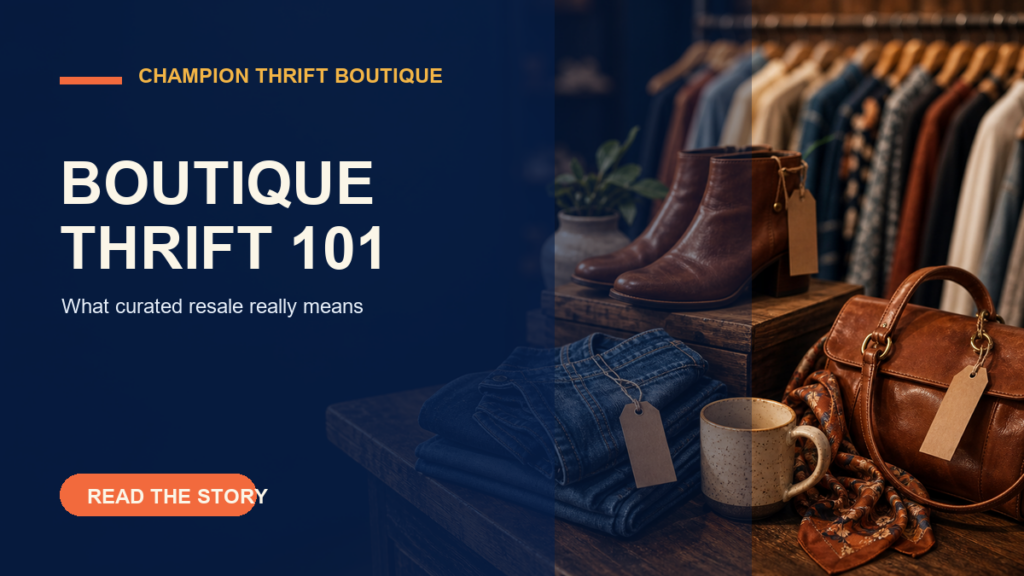
Vintage bags and shoes can be some of the most satisfying thrift finds because they change an outfit instantly. A leather purse, a sturdy pair of boots, a clean sneaker, or an older dress shoe can make basics feel styled. They can also be risky if you buy on excitement alone. Condition matters more here than almost anywhere else.
Start With Smell and Structure
Before checking labels, check smell. Strong mildew, smoke, or chemical odor can be difficult to remove from leather, lining, and shoes. A faint storage smell may improve with airing and cleaning. A deep odor may follow the item home. Trust your nose.
Then look at structure. Bags should hold their shape unless they are intentionally soft. Check handles, straps, stitching, zippers, corners, lining, and hardware. Shoes should have stable soles, intact stitching, and uppers that are not cracking apart. A little wear can be charming. Dry rot is not charming.
Know What Can Be Fixed
Some problems are simple: a dusty bag, loose thread, scuffed leather, missing polish, or worn laces. Other problems cost money: broken zippers, detached soles, torn lining, cracked patent leather, or damaged heels. A cobbler can do a lot, but the repair may cost more than the item.
Ask whether you would still want the piece after paying for repair. If the answer is yes, it may be worth it. If the answer is only yes because the price tag is low, walk away. Cheap problems are still problems.
Look Beyond the Brand
A recognizable label can be exciting, especially with designer bags or premium shoes. But brand alone should not make the decision. Counterfeits exist, condition varies, and not every famous name fits your life. Look at materials, craftsmanship, usefulness, and whether the item works with your wardrobe.
If you are researching valuable jewelry or accessories, the Federal Trade Commission’s Jewelry Guides are a reminder that descriptions and claims matter. For bags and shoes, the same general mindset applies: be curious, inspect details, and avoid paying for a story that the item cannot support.
Try Shoes Carefully
Vintage shoes can fit differently from modern shoes. Try both feet, walk a little, and pay attention to width, arch, heel slip, and stiffness. If shoes hurt in the store, they probably will not become your favorites later. Some leather stretches, but painful shoes are not a personality trait.
Buy for Real Outfits
A thrifted bag or shoe should work with what you actually wear. A dramatic purse may be perfect if it makes three simple outfits better. A boot may be worth buying if it fits your pants, dresses, and weather. Accessories are powerful because they can make a small wardrobe feel bigger.
For a more complete closet plan, read our guide to a desert capsule wardrobe. The right bag or shoe is not just a find. It is a bridge between the pieces you already own.
Authenticate With Humility
Most thrift shoppers are not professional authenticators, and that is okay. Treat possible designer finds with curiosity rather than certainty. Look at stitching, lining, hardware, logos, serial details, symmetry, material quality, and overall construction. Compare with reliable references before paying a premium. If the price is low and you simply love the piece, authenticity may matter less. If the price is high, it matters a lot.
Be careful with online claims too. A quick image search can help, but it is not proof. Counterfeit goods can copy obvious details while missing subtle ones. When in doubt, pay for the item in front of you, not the fantasy value attached to it.
Consider Cost Per Wear
A thrifted bag you carry twice a week for a year is a better buy than a dramatic purse that never leaves the closet. The same goes for shoes. Cost per wear is a simple way to separate excitement from usefulness. A $35 pair of boots worn fifty times costs less per wear than a $10 pair that hurts and sits untouched.
Think about your daily routes, weather, walking habits, and wardrobe. Tucson shoppers may care about dust, heat, parking lots, and comfort more than someone shopping for a subway commute. Buy for the life you actually have.
Store Them Properly
Once a good bag or shoe comes home, care matters. Stuff bags lightly so they keep shape. Let shoes dry between wears. Condition leather when appropriate. Keep items out of harsh sun. Replace laces, insoles, or heel caps early if needed. A small repair at the right time can extend the life of a thrifted accessory by years.
That is the deeper value of secondhand shopping: not only finding better pieces, but becoming a better caretaker of them.
When the details, comfort, and care plan all line up, vintage accessories can become the pieces you reach for constantly.
This blogpost is provided by Daniel K., a freelance writer contracted through Kallos Design and Marketing.