
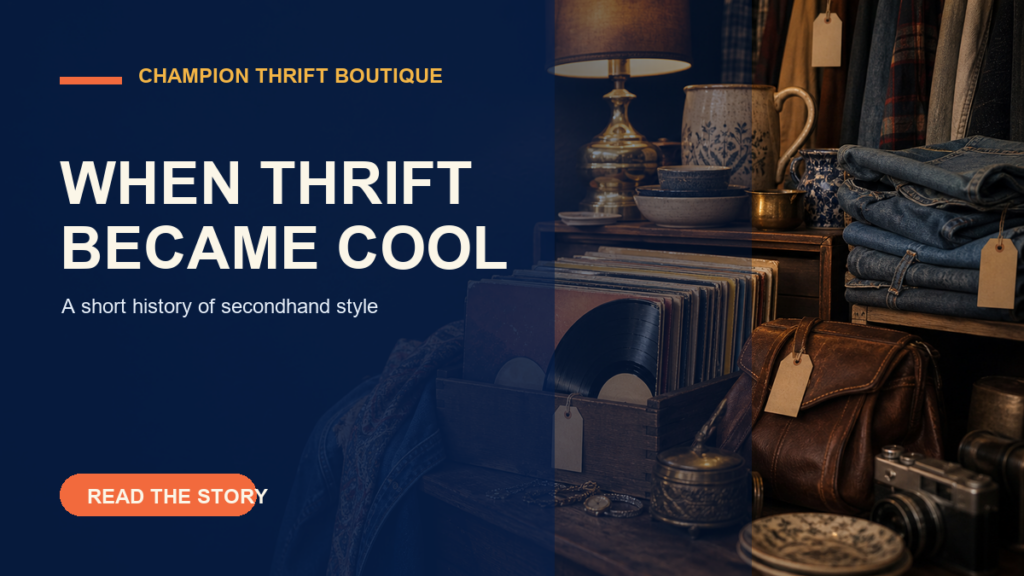
Secondhand shopping has been around for generations, but its reputation has changed dramatically. Used clothing and household goods were once associated mostly with necessity. Today, thrifting is also tied to sustainability, self-expression, nostalgia, rare finds, and personal style.
Goodwill was founded in 1902 and helped shape the modern resale model by collecting donated goods and using resale operations to support job training and community programs. The Salvation Army and many local charities also built long-running thrift systems around reuse and social support.
“When I was growing up, thrifting wasn’t cool, but now it is.â€
Champion Thrift Boutique, Ricky Scruggs
Why the Shift Happened
Several things changed at once. Vintage fashion became more visible. Younger shoppers started looking for individuality instead of mass-market sameness. Environmental concerns made reuse feel more responsible. Social media made thrift finds easier to show, style, and celebrate.
Thrifting Today
Modern thrifting is not just bargain hunting. It is a way to find better materials, older construction, discontinued designs, local character, and pieces with a past. A vintage jacket, a mid-century dish set, a record, a sports card, or a handmade decor piece can carry more personality than something bought new from a national chain.
The best thrift stores understand that shift. They make space for the hunt while keeping standards high enough that shoppers want to come back.
This blogpost is provided by Maya R., a freelance writer contracted through Kallos Design and Marketing.