
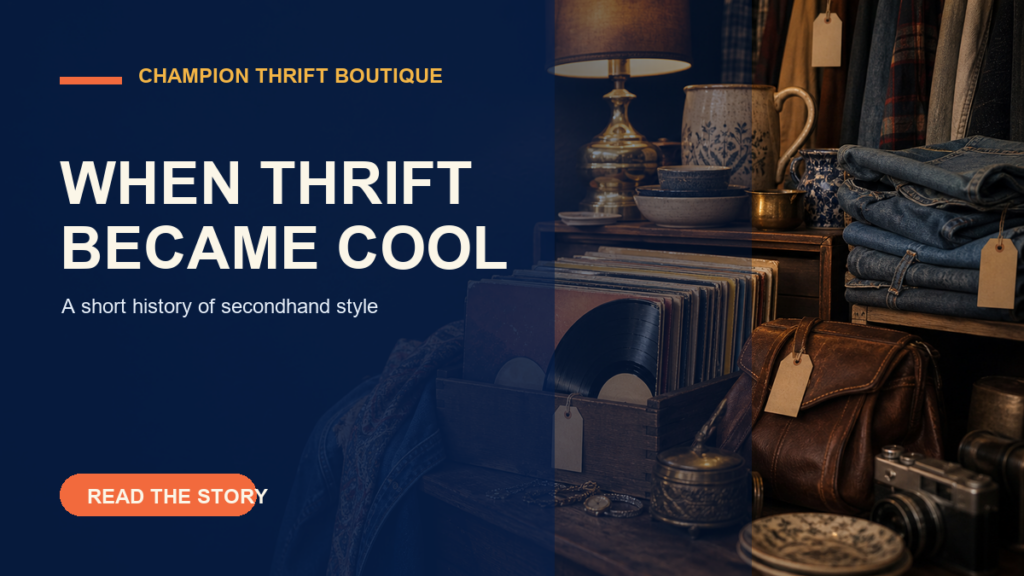
A thrift store can look effortless from the shopper’s side. A rack of jackets. A shelf of mugs. A couch near the front. A record crate that seems to have appeared at exactly the right time. But every secondhand item has a backstage life before it reaches the floor. Someone carried it, sorted it, checked it, priced it, cleaned around it, arranged it, and decided whether it belonged in the store at all.
That hidden work is the difference between a pile of donations and a real shopping experience.
The Donation Is Only the Beginning
When donations arrive, they do not arrive as a ready-made store. Bags may contain clean clothing, damaged clothing, missing pieces, fragile items, books, shoes, electronics, toys, linens, decor, and things that should have gone somewhere else. Staff and volunteers have to make quick but thoughtful decisions: what can be sold, what needs cleaning, what needs repair, what is unsafe, what is seasonal, and what is not usable.
This matters because resale is not free to operate. Sorting takes time. Trash disposal costs money. Cleaning takes labor. Space is limited. A store can only feel curated when someone is willing to say yes to the right items and no to the wrong ones.
Textiles Show the Scale
Clothing is one of the clearest examples of why sorting matters. The EPA’s textile waste data shows that textiles remain a major part of the municipal waste stream. Reuse helps, but only when clothing is clean enough, strong enough, and desirable enough to be worn again.
The same EPA dataset estimates that 17 million tons of textiles were generated in 2018, with 2.5 million tons recycled and 11.3 million tons landfilled. Those numbers make the sorting table feel less mundane. Every wearable jacket, usable blanket, sturdy pair of jeans, or clean shirt that makes it to the sales floor is part of a much larger effort to keep useful goods moving.
A thrift worker looking at a shirt is not only asking whether it is a shirt. They are asking whether another person will choose it. Is the fabric still good? Are there stains? Does it smell? Is the style useful? Is the price fair? Can it be displayed in a way that helps a shopper see the value?
Pricing Is Judgment
Pricing secondhand goods is harder than it looks. New retail has barcodes, wholesale costs, and standard inventory systems. Thrift has one-of-one objects. A leather jacket, a stack of plates, a mid-century lamp, a designer bag, and a box of toys all require different judgment. Condition, rarity, demand, brand, material, and local shoppers all matter.
Price too high, and good items sit. Price too low, and the store may not cover the labor that made the item shoppable. The best thrift pricing tries to respect both the shopper and the work behind the floor.
Reports on the resale economy, including the thredUP Resale Report, point to continued consumer interest in secondhand apparel. But demand does not remove the human judgment from resale. If anything, it increases the need for clear standards, because shoppers have more choices and better expectations than they did a decade ago.
Merchandising Makes the Hunt Possible
Merchandising is where donations become a story. A jacket on a crowded rack is just one more sleeve. A jacket near denim, boots, and a good bag becomes an outfit idea. A dish on a random shelf is a dish. A group of mugs, plates, and serving pieces becomes a table someone can imagine.
This is why boutique-style thrift feels different. It does not remove the treasure hunt. It gives the hunt a frame. Champion Thrift Boutique’s own showroom standards are built around that idea: floor-ready pieces, cleaner displays, and enough care that shoppers can slow down and actually see what is in front of them.
Donors Shape the Store Too
Good donations make the whole system work better. Clean clothing, paired shoes, complete sets, wrapped breakables, and labeled parts save time. Broken, wet, dirty, or incomplete items create extra labor and disposal problems. Donation is not simply getting rid of things. It is the first step in someone else’s shopping experience.
For shoppers, understanding that chain can make the store feel different. The mug you pick up passed through someone’s cabinet, a donation box, a sorting table, and a display shelf before it reached your hand. Thrifting is full of small transfers like that. The work is mostly invisible, but without it, the magic would collapse into clutter.
The next time a thrift store feels clean, organized, and easy to browse, notice the labor inside that feeling. It did not happen by accident.
That is the quiet truth of resale: the romance depends on operations. The better the receiving, sorting, pricing, and merchandising, the easier it becomes for shoppers to experience discovery instead of disorder. A good thrift floor is not random luck. It is a thousand small decisions made before the door opens.
This blogpost is provided by Elena S., a freelance writer contracted through Kallos Design and Marketing.