
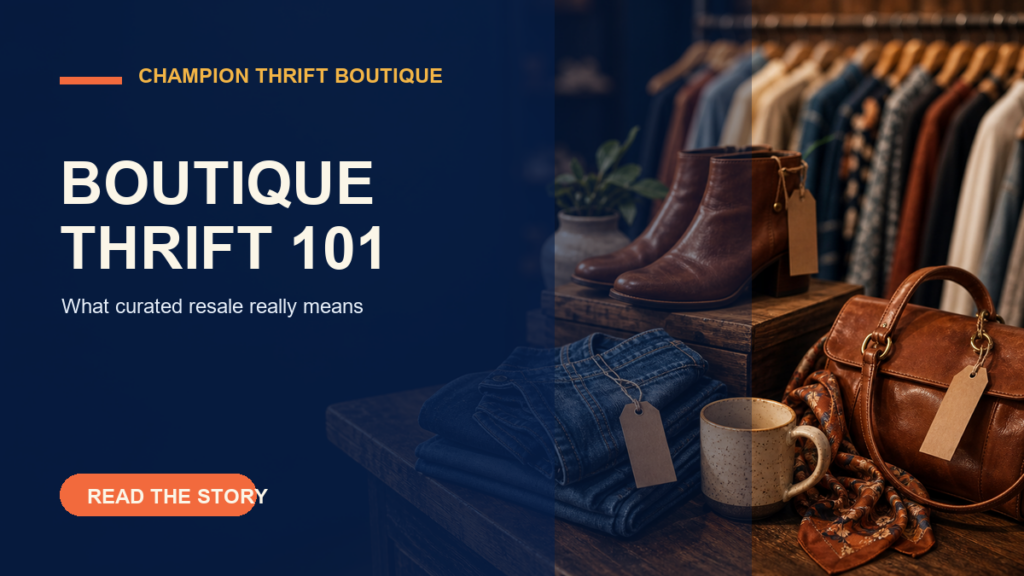
A thrift store feels boutique when the shopper can still experience discovery without feeling overwhelmed. It is not about being fancy for the sake of it. It is about care: what gets selected, how it is presented, how clean the space feels, and whether customers can actually see the value in front of them.
Curation Comes First
Boutique thrift starts before anything reaches the floor. Someone has to decide what belongs in the showroom. Condition, style, brand, usefulness, rarity, and local demand all matter. A curated shop does not need to be huge. It needs a point of view.
That point of view can include premium labels, vintage denim, nostalgic decor, antique finds, records, collectibles, and everyday pieces that are simply made well. The goal is to reduce noise without removing surprise.
Clean Presentation Changes the Hunt
Lighting, spacing, racks, displays, and signage all affect how people shop. A clean boutique-style environment helps customers slow down and look. When shoes are visible, jackets have room to breathe, and decor is arranged with intention, the shopper can imagine the item in real life.
This is why merchandising matters in resale. A great leather bag tossed in a pile may be missed. The same bag displayed near denim, boots, and a good jacket becomes an outfit idea.
Pricing Should Still Feel Like Thrift
Boutique thrift does not mean boutique retail pricing. Shoppers are still looking for value. The balance is important: recognize quality, but keep the experience accessible. When a shop feels clean and curated while still offering thrift-store possibility, customers come back.
The Human Element
The best resale spaces feel like someone is paying attention. At Champion Thrift Boutique, Sylvia’s eye shapes that experience. The racks, shelves, and displays are not random. They reflect a belief that secondhand shopping can feel polished without losing its character.
Boutique thrift works because it respects both the item and the shopper. It says: the hunt is still here, but we made it easier to enjoy.
What Shoppers Notice First
Shoppers may not immediately say “merchandising,” but they feel it. They notice whether the entrance makes sense, whether the racks are easy to move through, whether categories are clear, and whether the store smells and feels clean. Those details change how long people stay and how confidently they buy.
A boutique thrift store also understands pacing. Not every surface needs to be full. A rack can have breathing room. A shelf can feature a few strong pieces instead of every possible item. This makes the store feel more intentional and helps better finds stand out.
Staff knowledge matters too. A shopper may ask about sizing, era, condition, furniture loading, or whether new pieces arrive often. A helpful answer creates trust. Even when a shop is busy, a sense of care can make the experience feel personal.
The best boutique thrift spaces do not erase the thrill of secondhand shopping. They frame it. They make the hunt feel approachable for new shoppers and rewarding for experienced ones. That combination is why curated resale keeps growing: people want value, but they also want an experience that feels good while they search.
Why Curation Helps New Thrifters
Experienced thrift shoppers often enjoy chaos. They know how to scan racks quickly, ignore what is not for them, and spot quality in a crowded room. New shoppers may feel differently. Too much inventory can be intimidating, especially when they are not sure what counts as a good find. Boutique-style curation lowers that barrier.
A curated store gives beginners a place to start. Premium labels are easier to see. Decor is easier to imagine at home. Shoes, bags, jackets, records, and collectibles have enough space to be considered. The experience still feels like thrifting, but it does not require the shopper to decode everything alone.
That does not mean every item has to be rare. A clean, useful, well-priced everyday piece can belong in a boutique thrift environment if it meets the shop’s standards. The magic is in the mix: practical items, nostalgic pieces, premium finds, and the occasional object nobody expected to see.
Champion Thrift Boutique’s own story is rooted in that balance. You can read more about the people and purpose behind the store on the About Us page. The short version is simple: curation is not about making thrift stiff. It is about making the hunt feel worth the trip.
The Store Should Still Feel Human
A boutique thrift experience should not feel cold or overly precious. The best stores still have humor, surprise, and a little bit of neighborhood personality. A shopper should be able to find a polished outfit, a nostalgic record, a practical household item, and a conversation piece in the same visit.
That range is what keeps resale interesting. The boutique part brings order. The thrift part brings possibility. When both are present, the store feels edited but not sterile, elevated but still welcoming.
This blogpost is provided by Elena S., a freelance writer contracted through Kallos Design and Marketing.