
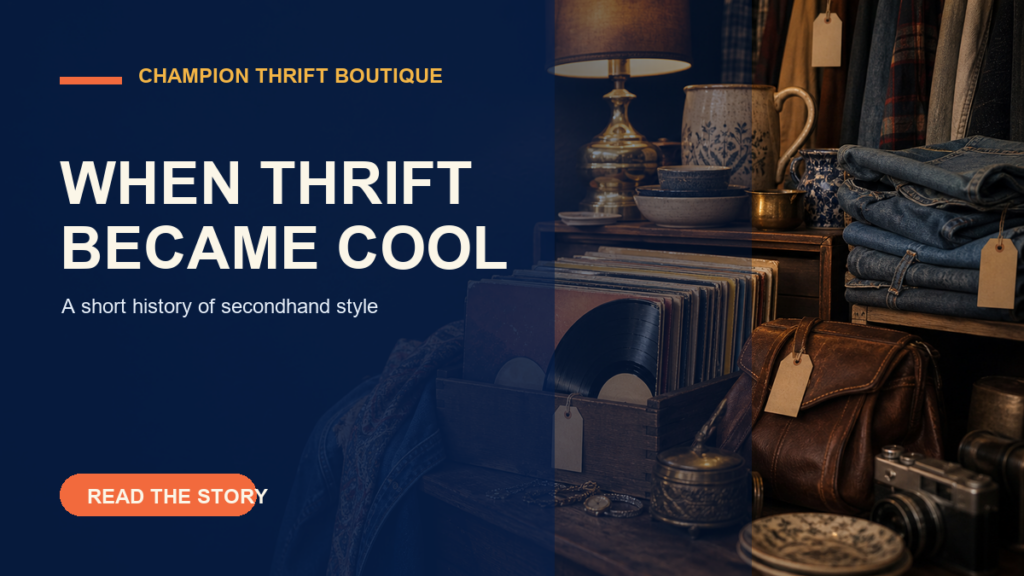
Furniture reuse rarely gets the same attention as clothing resale, but it should. A secondhand table, lamp, chair, mirror, shelf, or cabinet can change a room immediately. It can also keep a large, material-heavy object out of the waste stream. Unlike a shirt, furniture takes up space in a landfill quickly and often contains wood, metal, foam, plastic, fabric, adhesives, finishes, and hardware in one piece.
The EPA’s durable goods product-specific data includes furniture and furnishings as a major durable-goods category. In 2018, EPA tables estimate millions of tons of furniture and furnishings were generated as municipal solid waste, with a large portion landfilled. That makes reuse more than a design preference. It is a practical environmental choice.
Furniture Has a Long Visual Life
Good furniture can outlive trends. A solid wood side table, a brass lamp, a ceramic base, a sturdy bookcase, or a framed mirror can move from apartment to house to guest room to entryway. The best secondhand furniture has flexibility. It can be cleaned, restyled, refinished, or simply moved to a different wall.
This is why thrifted rooms often feel warmer than rooms built all at once from a catalog. Older pieces bring variation: different woods, shapes, textures, and signs of use. A room with one good secondhand anchor can feel more personal without feeling cluttered.
Reuse Works Best When the Piece Is Sound
Not every used furniture item should come home. Reuse matters most when the piece is structurally sound and likely to keep serving someone. Check legs, joints, drawers, wobble, odor, stains, upholstery, and whether the item can be transported safely. A broken piece that becomes your disposal problem is not the goal.
When the condition is right, however, the value can be excellent. A used table may be stronger than a new low-cost one. A vintage lamp may have better weight and proportion than something mass-produced yesterday. A real wood shelf may take sanding, paint, or oil better than composite furniture. Local reuse organizations such as Habitat Tucson HabiStore also show how home goods and building materials can keep serving households instead of immediately becoming waste.
Measure Before You Buy
The most sustainable furniture purchase is still a bad purchase if it does not fit. Keep measurements in your phone: wall widths, doorway sizes, trunk space, room depth, table height, sofa width, and shelf depth. Bring a tape measure. The best thrift stores cannot make a too-large piece fit through a hallway.
Planning also prevents overbuying. When you know that your entry needs a table under 36 inches wide, you can admire the 60-inch piece and leave it for someone else.
A Better Room, Not Just a Cheaper Room
Secondhand furniture should not only be about saving money. It can make a home feel layered, collected, and specific. The right lamp changes evening light. The right chair creates a reading corner. The right table makes an entryway work. Those daily improvements are part of the value.
Furniture reuse matters because the object is big enough to affect both a room and a waste stream. When you choose well, you get something practical, visual, and responsible at the same time.
The Hidden Cost of Cheap Furniture
Low-cost new furniture can be helpful in the short term, especially for people setting up a first apartment or filling an immediate need. The problem is that some pieces are not designed to move, repair, or age well. Once a flimsy shelf swells, a particleboard table splits, or a cheap chair loosens beyond repair, disposal may be the only option.
Secondhand shopping gives people a chance to find older pieces that were built with repair in mind. Screws can be tightened. Wood can be cleaned. Lamps can be rewired by a professional. Drawer pulls can be replaced. A piece with real structure can keep adapting, which is exactly what reuse needs.
Design Value Matters Too
Reuse is not only about avoiding waste. It is also about building better rooms. Secondhand furniture often brings proportion and material variation that new matching sets can lack. A thrifted side table, a vintage mirror, or a ceramic lamp can make a room feel less temporary. It says someone made a choice, not just a purchase.
That visual value can make people keep pieces longer. A person is less likely to discard a chair they genuinely love, a table that fits perfectly, or a lamp that gives the room its evening mood. Emotional durability is still durability. When an object feels personal, it is less likely to become disposable.
Reuse Needs Practical Boundaries
There is a line between reuse and rescue fantasy. If a piece smells bad, has serious structural damage, needs expensive upholstery, or cannot fit through the door, it may not be the right secondhand buy. The goal is not to save every object. The goal is to choose pieces with enough life left to be useful.
For Tucson shoppers, that means bringing measurements, checking condition in daylight when possible, and being honest about transport. A good furniture find should make the home easier to live in, not create a month-long problem in the garage.
This blogpost is provided by Maya R., a freelance writer contracted through Kallos Design and Marketing.